Top 20
20 Hidden Gems in the USA No One Talks About (But Should)
Discover 20 lesser-known natural wonders across the United States, from eerie badlands in New Mexico to moonbow waterfalls in Kentucky, that offer breathtaking scenery without the crowds of famous national parks.

By
Everyone has seen the same ten photos of Yellowstone’s geysers and the same crowded overlook at the Grand Canyon. But the United States is enormous, and tucked between the famous parks and postcard cities are dozens of places that barely make it onto a map. This list of hidden gems in the USA is built for travelers who want quiet trails, empty beaches, and views that feel like they belong to you alone, at least for an afternoon.
Below you’ll find 20 underrated destinations spread across the West, the Southwest, the Midwest, the South, and the Northeast. Some are state parks with almost no name recognition outside their own region. Others are national monuments that get a fraction of the visitors their more famous neighbors do. Every one of them is worth the detour.
What Actually Makes a Place a Hidden Gem?
A hidden gem isn’t just remote. It’s a spot with real scenic or cultural value that, for whatever reason, never made it into the mainstream travel conversation. Sometimes it’s location (far from an interstate), sometimes it’s marketing (no big park service budget), and sometimes it’s just bad luck (overshadowed by a famous neighbor).
What ties these 20 hidden gems in the USA together is that they reward effort. You’ll need to plan a bit, drive a little further, or check trail conditions before you go. In exchange, you get scenery without the shuttle buses and parking lot lines.
Hidden Gems in the American West
1. City of Rocks National Reserve, Idaho
This otherworldly landscape of granite spires near the Utah and Nevada borders was once a landmark for pioneers on the California Trail. Rock climbers know it well, but almost no one else does. Camping among the towering formations feels like sleeping inside a sculpture garden, and the stargazing here rivals anywhere in the Mountain West.
2. Bisti/De-Na-Zin Wilderness, New Mexico
Badlands don’t get much stranger than this. Hoodoos, cracked earth, and eroded rock formations shaped like mushrooms and eggs spread across 45,000 acres with no marked trails. It’s a photographer’s dream at sunrise, and because there’s no official path system, you’ll likely have entire sections to yourself.
3. Kasha-Katuwe Tent Rocks National Monument, New Mexico
Cone-shaped rock formations rise from the canyon floor like a natural cathedral. The Slot Canyon Trail squeezes hikers through narrow passages before opening onto sweeping mesa views. It’s managed by the Pueblo de Cochiti, and visitor numbers are capped, which keeps the experience peaceful even on weekends.
4. Cathedral Gorge State Park, Nevada
Bentonite clay formations create narrow slot canyons and cathedral-like spires just off U.S. Route 93 in rural Nevada. Most road trippers speed past on their way to Las Vegas without knowing this place exists. Short, easy trails make it accessible for families, and the golden-hour light on the clay walls is spectacular.
5. Kelso Dunes, Mojave National Preserve, California
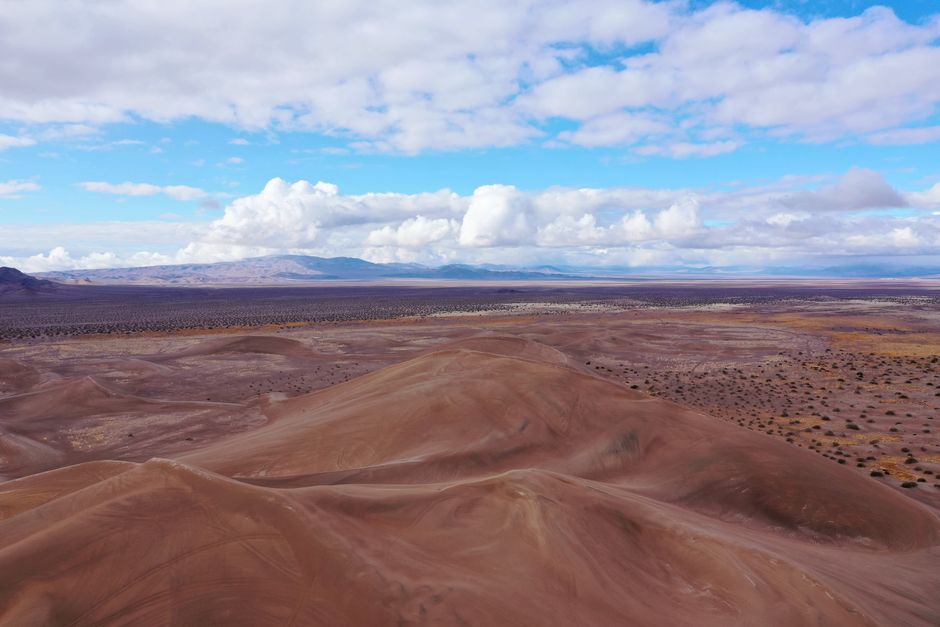
While Death Valley draws crowds, the Mojave National Preserve stays quiet, and Kelso Dunes might be its best-kept secret. These towering sand dunes rise nearly 650 feet above the desert floor, making them among the tallest in the Mojave, yet most road trippers zoom past on I-40 without ever knowing they exist. Climb to the summit at sunset and you might hear the dunes “sing,” a low humming vibration caused by sand grains shifting beneath your feet. Free primitive camping nearby means you can watch the Milky Way ignite over the dunes with virtually zero light pollution.
6. Great Basin National Park, Nevada
Great Basin is one of the least visited national parks in the country, and that’s exactly the point. Wheeler Peak rises over 13,000 feet, ancient bristlecone pines here are some of the oldest living organisms on Earth, and Lehman Caves offers guided tours through a marble cavern most Americans have never heard of. The park is also an International Dark Sky Park, so bring a star chart. On a clear night, you can see the Milky Way stretch from horizon to horizon without a single artificial light interrupting the view.
7. Capitol Reef National Park, Utah
Utah’s “Mighty Five” national parks get plenty of attention, but Capitol Reef is consistently the quietest of the bunch. Its Waterpocket Fold, a 100-mile wrinkle in the earth’s crust, creates dramatic cliffs and canyons without the crowds of Zion or Arches. Don’t miss Cathedral Valley, a remote section accessible only by high-clearance vehicle, where sandstone monoliths rise from the desert floor like something out of another planet. History buffs will also appreciate the historic Fruita orchards, where you can pick fresh fruit in season for free.
8. Cumberland Island National Seashore, Georgia
Wild horses roam untouched beaches, moss-draped oaks form cathedral-like canopies, and the ruins of a Gilded Age mansion sit quietly reclaimed by nature. Cumberland Island limits daily visitors to a few hundred people, and there are no paved roads, no fast food, and barely any cell service. It’s reachable only by ferry, which keeps the crowds thin and the sense of discovery high. Backpackers can camp overnight for an experience that feels closer to a private nature reserve than a public park.
9. Apostle Islands National Lakeshore, Wisconsin
Most Americans don’t associate the Midwest with sea caves and turquoise water, but the Apostle Islands prove otherwise. Kayaking through the sandstone sea caves along Lake Superior’s shoreline feels like paddling through a natural sculpture gallery, especially when the caves freeze into massive ice formations in winter. Twenty-one islands make up the archipelago, and several are dotted with historic lighthouses that see only a trickle of visitors each year compared to more famous lakeshores.
10. Dry Tortugas National Park, Florida
Just 70 miles from Key West sits one of the most remote national parks in the country, accessible only by boat or seaplane. Fort Jefferson, a massive 19th-century brick fortress, rises out of turquoise water surrounded by some of the healthiest coral reefs in the Florida Keys. Snorkeling here reveals sea turtles, tropical fish, and shipwrecks without the crowds that overwhelm more accessible reef destinations. Because there’s no ferry service every hour, most visitors have long stretches of beach entirely to themselves.
11. Steens Mountain, Oregon
Rising abruptly from Oregon’s high desert, Steens Mountain offers a 50-mile scenic loop drive that climbs nearly a mile in elevation, revealing glacially carved gorges and panoramic views of the Alvord Desert below. Wild mustangs still roam the surrounding rangeland, and the drive is so remote that gas stations are scarce for over a hundred miles. Come in late summer when the snow finally melts off the high-elevation road, and you’ll find wildflower meadows that rival anything in the Cascades, minus the crowds.
12. Letchworth State Park, New York
Nicknamed the “Grand Canyon of the East,” Letchworth features three major waterfalls along a 17-mile gorge carved by the Genesee River. Despite its dramatic scenery, it remains largely unknown outside the Northeast. Hot air balloon rides drift over the gorge in summer, and in autumn the surrounding forest turns into a blaze of red and orange that rivals any New England foliage tour, without the traffic jams of Vermont’s leaf-peeping season.
13. Congaree National Park, South Carolina
Congaree protects the largest intact expanse of old-growth bottomland hardwood forest left in the United States, with some trees towering over 130 feet. A boardwalk trail winds through the swamp, letting visitors stay dry while surrounded by champion trees and synchronous fireflies that put on a natural light show for about two weeks each spring. It’s one of the quietest national parks in the Southeast, and canoeing Cedar Creek at dawn feels like paddling through a living cathedral.
14. Cumberland Falls State Resort Park, Kentucky
Sometimes called the “Niagara of the South,” Cumberland Falls is one of only a handful of places in the Western Hemisphere where you can regularly see a moonbow, a nighttime rainbow created by moonlight refracting through the falls’ mist. Unlike its more famous northern counterpart, Cumberland Falls rarely sees crowds, and the surrounding forested gorge offers miles of quiet hiking trails with overlooks of the roaring 125-foot-wide falls.
15. Enchanted Rock State Natural Area, Texas
This massive pink granite dome rises 425 feet above the Texas Hill Country and has been considered sacred ground by Indigenous peoples for thousands of years. Climbing to the summit rewards hikers with sweeping views of the surrounding hills, and on quiet nights, the rock reportedly makes creaking and groaning sounds as it cools, giving it its name. Because it sits off the beaten path between Austin and Fredericksburg, it draws a fraction of the visitors that flock to Texas’s more famous state parks.
16. Toroweap Overlook, Grand Canyon National Park, Arizona
While the South Rim sees millions of visitors a year, Toroweap Overlook on the remote North Rim gets only a trickle. The payoff is a jaw-dropping, unobstructed view straight down 3,000 feet to the Colorado River, with no guardrails and almost no other tourists in sight. Reaching it requires a rough, hours-long dirt road drive, but that inconvenience is exactly why it remains one of the most solitary and spectacular viewpoints in the entire national park system.
17. Kartchner Caverns State Park, Arizona
This living cave system stayed a closely guarded secret for over a decade after its discovery in 1974, as cavers and the state worked to protect its delicate formations before opening it to the public. Even now, visitor numbers are strictly limited through timed tours, preserving the cave’s still-growing stalactites and rare formations like the 21-foot soda straw, one of the longest in the world. It’s a rare chance to see a cave ecosystem that hasn’t been damaged by decades of foot traffic.
18. Silver Falls State Park, Oregon
Oregon’s largest state park is often overshadowed by the Columbia River Gorge, despite featuring ten waterfalls connected by an eight-mile loop trail known as the Trail of Ten Falls. Several trails pass directly behind the falls, letting hikers walk through curtains of mist inside moss-covered basalt caves. Visit on a weekday and you can have entire waterfalls completely to yourself, something that’s nearly impossible at more famous Pacific Northwest cascades.
19. Tettegouche State Park, Minnesota
Perched along Lake Superior’s rugged North Shore, Tettegouche combines sea cliffs, inland lakes, and Minnesota’s highest waterfall, the 70-foot High Falls on the Baptism River. Rock climbers quietly flock to its cliffs, but the park otherwise stays remarkably uncrowded compared to Minnesota’s more publicized lake destinations. Winter transforms the waterfalls into surreal ice sculptures, drawing a small but devoted following of ice climbers and photographers who consider it one of the Midwest’s best-kept secrets.
20. Hocking Hills State Park, Ohio
Ash Cave, Old Man’s Cave, and Cedar Falls sit tucked into a forested region of southeastern Ohio that many residents of neighboring states have never visited. Massive recess caves, box canyons, and waterfalls make it feel more like Appalachia’s answer to a mini national park than a state park most people overlook. Visit midweek in the fall and you can wander through Ash Cave’s 700-foot recess cave, one of the largest of its kind east of the Mississippi, in near-total silence.
Tips for Exploring Hidden Gems Safely
Part of what makes these places special is their remoteness, but that same isolation means you need to plan more carefully than you would for a well-trodden national park. Cell service is often spotty or nonexistent, so download offline maps before you go and let someone know your route and expected return time. Many of these destinations, especially the desert sites in New Mexico, Nevada, and Utah, have little to no shade and no potable water sources, so pack more water than you think you’ll need and pace yourself in the heat.
Sun exposure is a real risk at high-elevation and desert locations, and it’s worth reviewing Mayo Clinic’s guidance on sun safety before a long day outdoors, particularly if you’ll be hiking above treeline or across exposed rock and sand. If you’re heading to higher elevations like Great Basin’s Wheeler Peak or Steens Mountain, it’s also smart to understand the early symptoms of altitude sickness, which Healthline breaks down clearly, so you can recognize warning signs like headache, nausea, or dizziness before they become serious.
Finally, respect the fragility of these places. Many hidden gems stay pristine precisely because visitor numbers remain low, and that balance can shift quickly if trails get overrun or formations get damaged. Stick to marked paths where they exist, pack out everything you bring in, and avoid touching delicate cave formations, hoodoos, or clay structures that can take centuries to form and mere seconds to break.
Why These Hidden Gems Are Worth the Extra Effort
Every destination on this list requires a little more planning than a typical national park visit; longer drives, fewer services, and sometimes no cell signal at all. But that extra effort is precisely what preserves the sense of discovery that’s become so rare in modern travel. Standing alone at Toroweap Overlook with the entire Grand Canyon stretched below you, or watching a moonbow arc over Cumberland Falls at midnight, offers something crowded landmarks simply can’t: space to actually experience the place instead of just photographing it.
If you’re planning a road trip this year, consider building your itinerary around two or three of these hidden gems rather than chasing the most Instagrammed spots in the country. You’ll spend less time in traffic and lines, and more time actually absorbing the scenery you traveled to see.
Frequently Asked Questions
What is the least visited national park in the United States?
Isle Royale and Gates of the Arctic typically rank among the least visited, but among the more accessible parks featured here, Great Basin National Park in Nevada consistently sees far fewer visitors than similarly stunning parks, largely due to its remote location far from major highways.
Are these hidden gems safe to visit without a guide?
Most can be visited safely without a guide as long as you come prepared with maps, extra water, and a full tank of gas, since services are limited. A few spots, like Bisti/De-Na-Zin Wilderness and Cathedral Valley in Capitol Reef, have no marked trails, so a GPS device or offline map is strongly recommended.
What is the best time of year to visit desert hidden gems like Kelso Dunes or Enchanted Rock?
Fall through early spring is ideal for desert destinations, since summer temperatures can climb well above 100 degrees Fahrenheit. Cooler months also bring clearer skies for stargazing and more comfortable hiking conditions throughout the day.
Do I need a permit to visit any of these locations?
Some spots, like Kasha-Katuwe Tent Rocks and Cumberland Island, cap daily visitor numbers or require advance reservations, so it’s worth checking each park’s official website before you go. Most state parks and BLM land, like Bisti/De-Na-Zin and Kelso Dunes, don’t require permits for day use.
Which hidden gem is best for a family with young kids?
Cathedral Gorge State Park in Nevada and Silver Falls State Park in Oregon are both excellent choices for families, thanks to short, well-maintained trails and dramatic scenery that doesn’t require strenuous hiking to enjoy.
Final Thoughts
The United States is full of landscapes that rival its most famous landmarks, they just haven’t made it onto everyone’s bucket list yet. From cathedral-like hoodoos in New Mexico to moss-draped wilderness on a Georgia barrier island, these 20 hidden gems prove that some of the country’s most breathtaking scenery is still waiting for the crowds to catch up. Get there before they do.